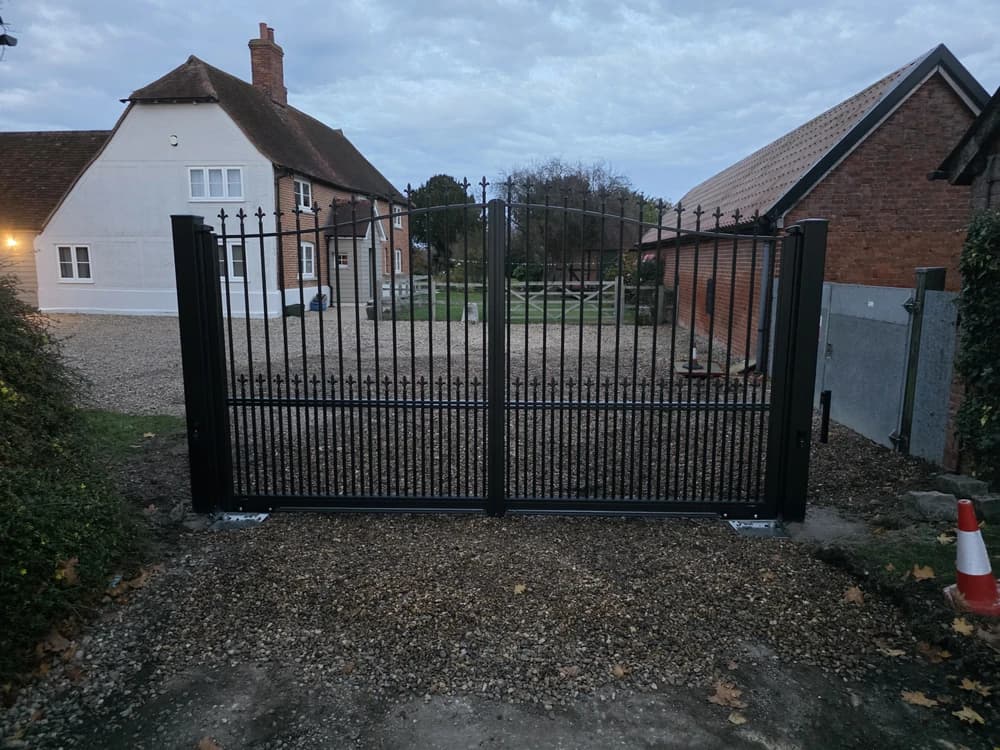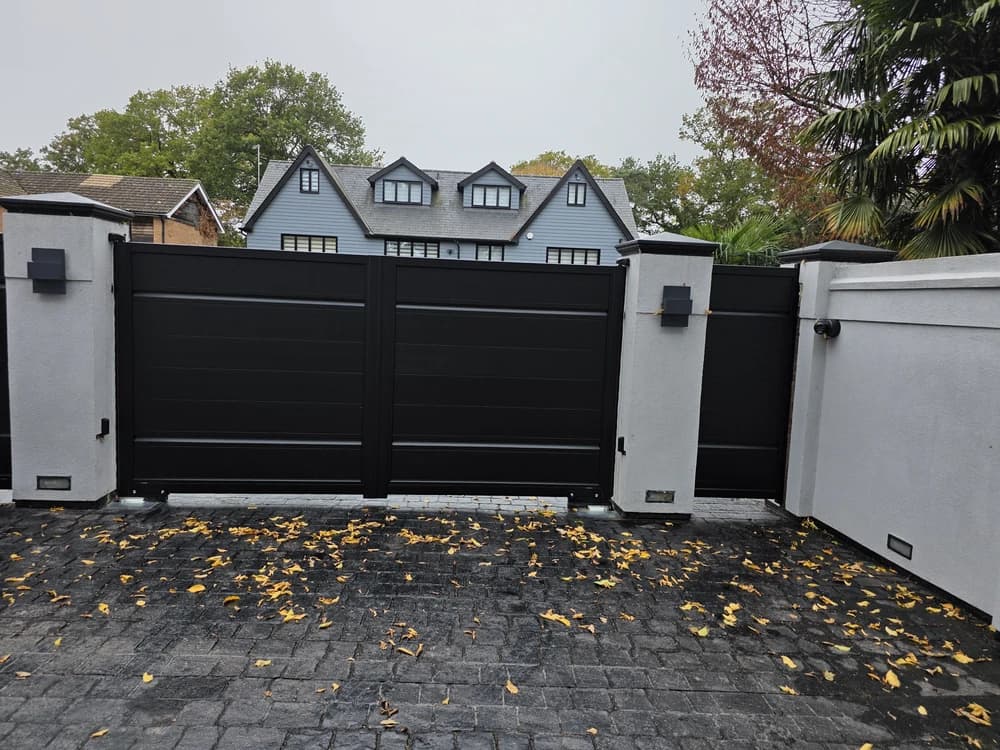
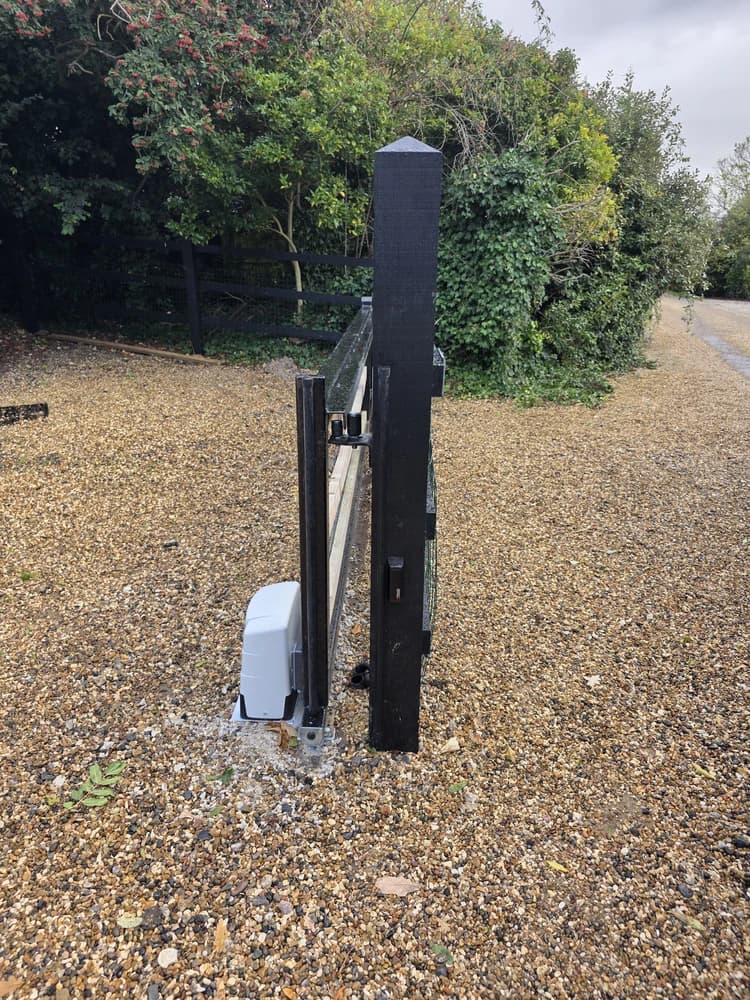
Most automatic gates don't die suddenly. They warn you. A motor that's started straining, a swing leaf that judders on the open, an intercom that crackles when it rains. People ignore those small signs for months, then ring us in January when the gate's stuck half open in the frost and they can't get the car out. So this is the guide we wish more owners read before that happens.
We've been building and installing gates for over 18 years, more than 1,400 of them across the UK, and we service plenty we never built. If another firm fitted your automation and then vanished, that's not your problem to solve alone. Here's what actually keeps an electric gate running, what a real service covers, and the handful of jobs you can do yourself for nothing.
Why automatic gates fail (and why they tell you first)
The mechanical side is hard-wearing. A hot-dip galvanised steel gate on decent hinges will outlast most of the cars that drive through it. What wears out is the automation: the motor, the ram or the underground arm, the control board, the photocells, the battery backup. Those are the parts doing actual work several times a day, year after year.
And they rarely go bang without warning. A hydraulic ram that's losing oil gets slower and noisier before it stops. A worn sliding gate cog skips a tooth here and there months before it strips. Photocells that have drifted out of alignment will trip the safety stop on and off first, gate reverses for no reason, before they fail outright.
The owners who get caught out are the ones who train themselves to ignore the early signs. A bit of squealing becomes normal. The gate taking two goes to latch becomes normal. Then it isn't a small fix anymore, it's a callout and a new motor.
- Slower opening, or a motor that strains and gets hot, usually means a hydraulic or gearbox issue, or hinges starting to bind.
- A gate that opens then reverses on its own? Almost always dirty or misaligned photocells.
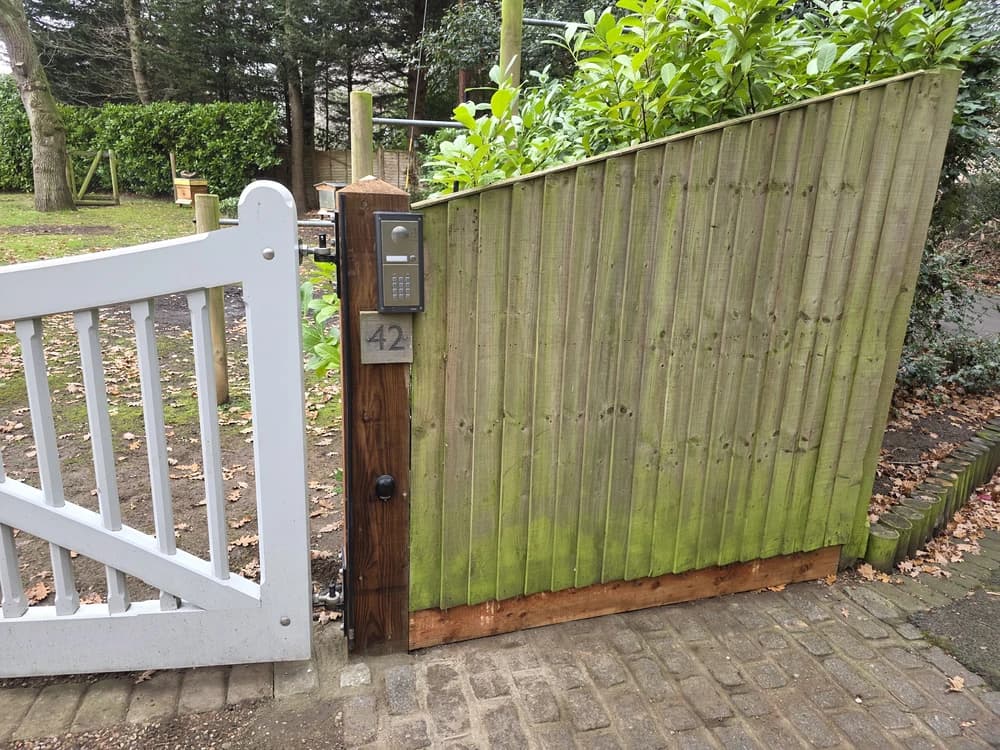
- Intermittent intercom or keypad faults that come and go with the weather point to water getting into a connection.
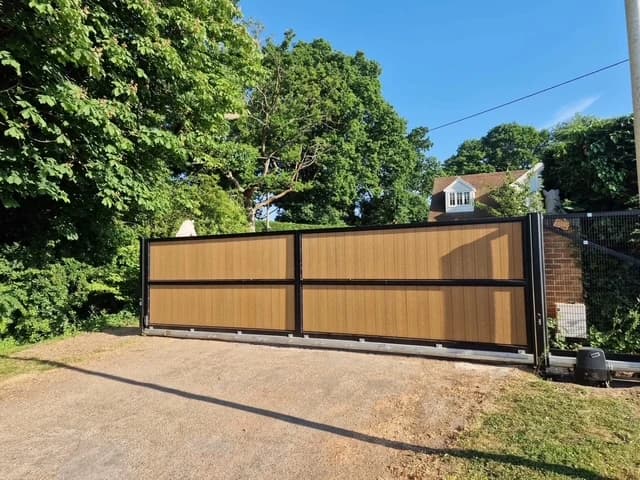
- Grinding or skipping on a sliding gate means the rack or the bottom wheels are worn, sort it before it strips.
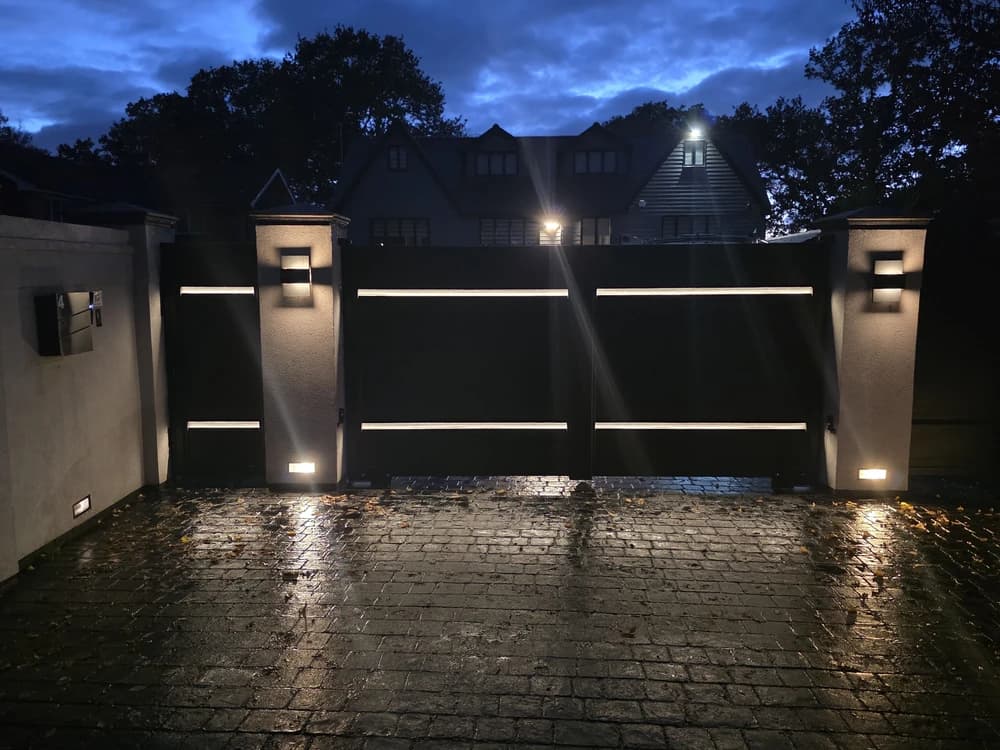
What a proper yearly service actually covers
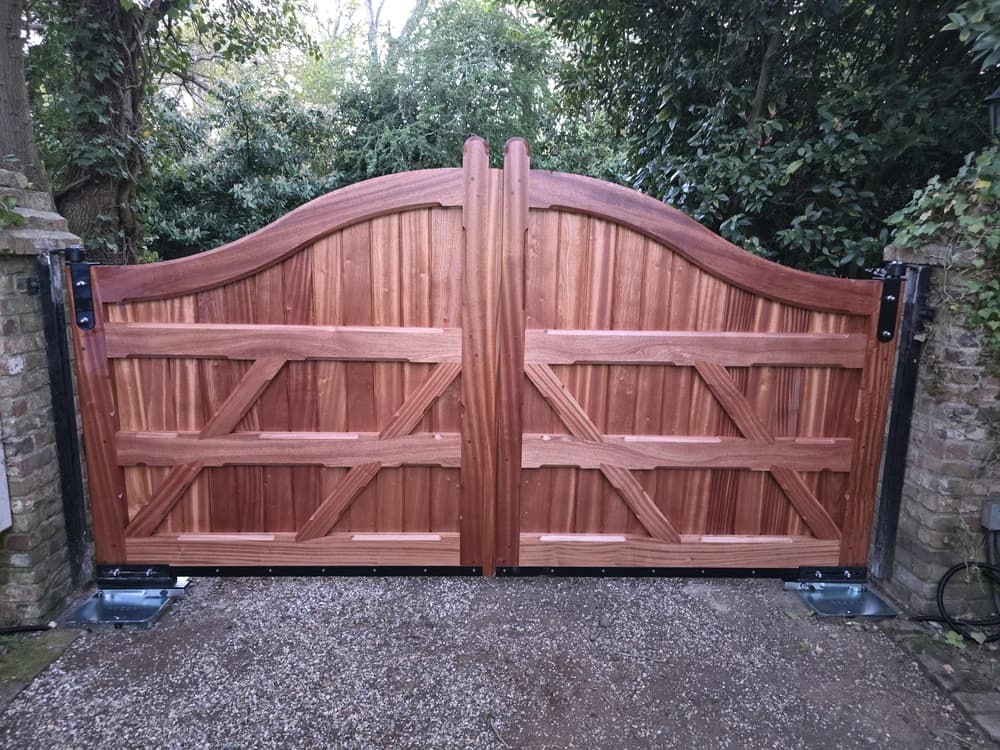
A real service is more than a squirt of oil and a wave. When we go out, the gate comes apart far enough to check the bits that matter, and it goes back together force-tested. Roughly a couple of hours on site for a standard 4m double-swing driveway gate, a bit longer for a heavy sliding or cantilever setup spanning 6m or more.
We check and grease the hinges and pivots, inspect the welds and any bracing for stress cracks, and test the manual release so you know you can get the gate open by hand in a power cut. The motor or ram gets checked for play and leaks. We test the photocells, the safety edges, the keypad, the fob receiver and the intercom, and we confirm the battery backup still holds a charge rather than just pretending to.
Then the important part. Every automated gate we service is force-tested to BS EN 12453, the standard that governs how hard a powered gate is allowed to push before it stops. A gate that closes with too much force is a crush risk, and it's the installer's legal responsibility to get that right. Plenty of gates out there were never tested properly when they went in. We find them all the time.
The cheap jobs you can do yourself
You don't need us for everything. Three or four small habits between services will prevent a good chunk of the faults we get called out for, and they cost nothing.
Keep the photocells clean. They're the little lenses either side of the opening, usually about shin height. A smear of mud, a cobweb, a splash of road grit, and the gate thinks something's in the way and refuses to close. Wipe them with a damp cloth once a month. It's the single most common false fault we see, and it's a ten-second fix you can do yourself.
- Clear the track on a sliding gate. Leaves, gravel and frozen slush jam in the bottom channel and the motor fights it every cycle.
- Find your manual release key now, not in a power cut. Make sure you can actually disengage the motor and roll the gate by hand. Practise it.
- Don't pressure-wash the motor housing or the control box. You'll drive water straight into the electronics.
- Give the hinges a glance for rust runs or a leaf that's started to drop. Catching a sagging gate early saves the motor a lot of strain.
Winter is when gates break
Cold weather is hard on automation, and it's no coincidence that our busiest week for callouts is usually the first proper frost. A few things go wrong when the temperature drops.
Hydraulic rams thicken up in the cold and move slowly until they warm through, so a gate that was fine in October starts straining on the first frosty morning. Condensation builds inside control boxes that aren't sealed well, then the damp gets across the terminals and you get random faults that clear up by lunchtime. And batteries hate the cold. A backup battery that's already three or four years old and limping will often give up entirely below freezing, which is exactly when you'll be relying on it during a power cut.
Frozen ground moves too. We've seen swing gates that catch on the ground in January because the slab has heaved a few millimetres in the frost. If your gate's started scraping in cold weather, don't keep forcing it through, you'll cook the motor. The winter fix is mostly about prevention: a service in autumn, fresh backup batteries every three or four years, a control box that's properly sealed, and photocells kept clear of frozen muck. Sort it in October and you won't be ringing anyone in January.
We service gates we didn't install
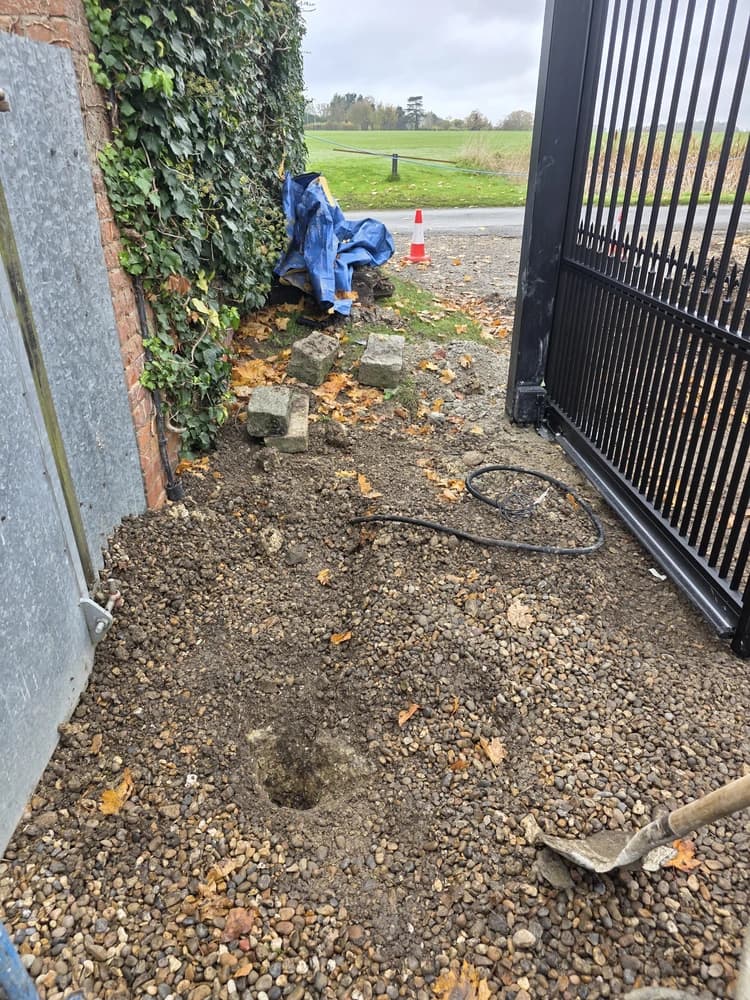
A lot of the gates we look after weren't built in our workshop. The installer's gone bust, or they only did the groundwork and never came back, or the original automation was fitted by a general builder who'd never force-tested anything in his life. None of that matters to us.
We work with the main motor brands, Roger Technology and SEA included, so whatever's bolted to your posts, we can usually source the parts and put it right. If a board's genuinely beyond repair we'll tell you straight, and we'll quote a replacement that actually suits the weight and duty of your gate rather than the cheapest unit that'll just fail again. We'd rather fix what you've got than sell you a new gate you don't need.
If your automation's making a noise it didn't used to, or you've never had it serviced and you're not sure it's even safe, give us a ring on 01206 670305. A yearly check is a lot cheaper than a January callout, and a lot cheaper than a new motor.
- Electric gates almost always warn you before they fail, slower opening, odd reversing, weather-dependent faults, so don't train yourself to ignore the early signs.
- A proper yearly service checks hinges, welds, the motor or ram, photocells, intercom and battery backup, and force-tests the gate to BS EN 12453.
- Clean the photocells monthly, clear the sliding track, and know where your manual release key is. Those three habits prevent most callouts.
- Winter kills gates: thickened rams, condensation in control boxes, dead backup batteries. Service in autumn and replace old batteries before the frost.
- We service gates other firms installed and work with the main motor brands, Roger Technology and SEA included. Call 01206 670305.